
In a groundbreaking move set to redefine the landscape of software testing, Leapwork has infused agentic AI capabilities into its test automation platform, enabling a revolutionary approach to application testing workflows. This innovation promises continuous validation without the need for developers to write test scripts, offering a seamless experience for software development teams. By leveraging an AI layer that observes application behavior in real time, Leapwork claims to generate test cases autonomously based on discovered user flows. The AI also adapts tests in response to UI changes, effectively eliminating the notorious maintenance burden that leads to the collapse of most test automation initiatives within just 18 months. Leapwork’s initial customer deployments have shown a 60% reduction in test authoring time and a remarkable 40% improvement in defect detection rates compared to traditional scripted methods. As Leapwork positions itself against established giants like Tricentis and SmartBear, this article explores how agentic AI aims to make visual test automation ‘self-healing’ and what it means for the future of software testing.
Context
The realm of software testing has long been burdened by challenges surrounding automation. Traditionally, test automation requires significant time and resources to develop and maintain scripts, which often become obsolete with UI changes. This leads to a high failure rate of test automation projects. The rise of AI and machine learning technologies has provided new avenues for innovation in testing methodologies, creating systems capable of adapting to changes without manual intervention. Prior to Leapwork’s entry with agentic AI, many companies relied on scripted testing solutions offered by industry leaders like Tricentis and SmartBear. These solutions, while effective, often involved substantial maintenance efforts, causing a drag on development agility and time-to-market.
The significance of Leapwork’s innovation is underscored by the current trends within the industry. As software development cycles continue to accelerate, the demand for more agile and responsive testing solutions has grown exponentially. The introduction of agentic AI marks a pivotal shift toward reducing the manual burden on developers and QA teams. By focusing on self-healing capabilities, Leapwork is poised to address a critical gap in the market—streamlining testing processes while maintaining high quality and reliability. The timing of this development is crucial, as businesses strive to enhance their CI/CD pipelines and integrate more efficient, cost-effective testing solutions.

Leapwork’s strategic positioning against established players like Tricentis and SmartBear is a bold move. These companies have dominated the market by providing robust automation tools that require significant investment in both time and skill. Leapwork’s agentic AI, by contrast, promises to democratize test automation by reducing the complexity and resources needed to maintain test environments. This could potentially disrupt the existing market dynamics, offering a new paradigm where test automation adapts to application changes in real time, thereby ensuring continuous integration without the overhead of frequent manual updates.
What Happened
This week, Leapwork announced the integration of agentic AI into its test automation platform, a development that could potentially revolutionize the way tests are authored, maintained, and executed. According to Leapwork, the new AI capabilities observe application behavior in real time and autonomously generate test cases based on user interaction patterns. This ability to discern user flows without pre-written scripts represents a significant advancement in automation technology. Leapwork reports that in initial deployments, customers experienced a 60% reduction in the time required to author tests. This efficiency gain is coupled with a 40% improvement in defect detection rates when compared to traditional scripted testing approaches.
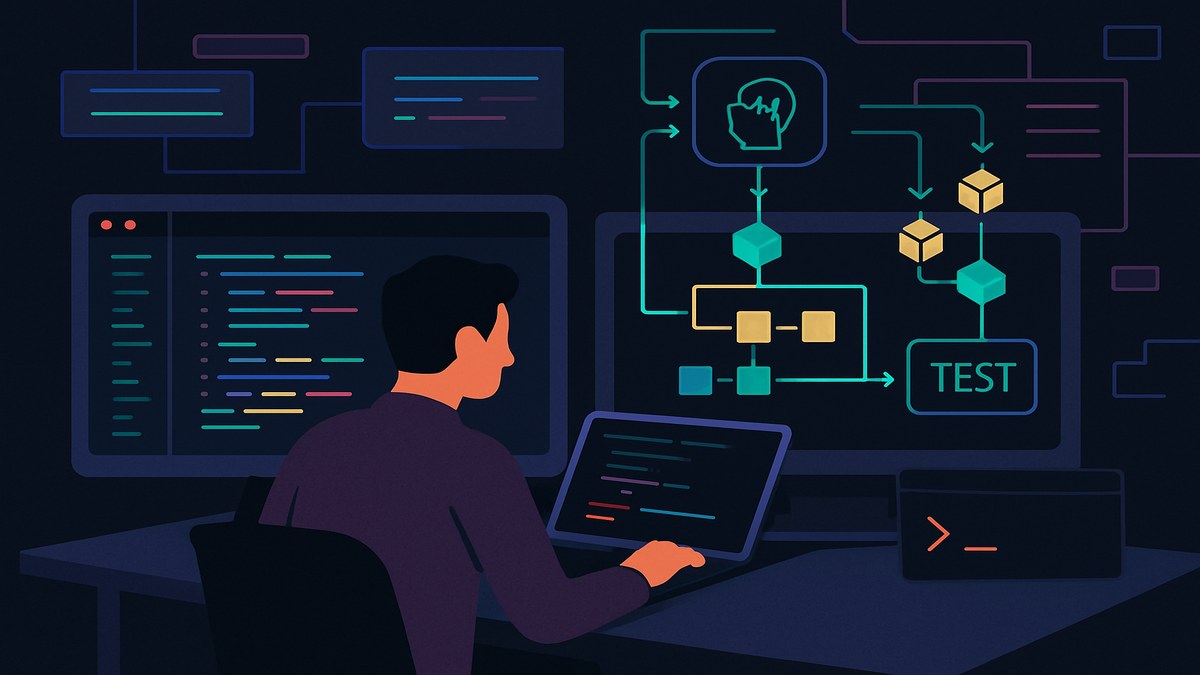
The agentic AI feature not only automates test creation but also prioritizes which tests to run based on an analysis of code changes. This targeted approach reportedly reduces the runtime of continuous integration (CI) pipelines by up to 70%, all while maintaining equivalent defect coverage. This functionality is particularly advantageous for development teams who need to balance rapid deployment schedules with stringent quality assurance standards. The automation platform supports web, desktop, and mobile applications, making it a versatile tool for a wide range of software development projects.
Leapwork’s strategic move positions it in direct competition with established industry players like Tricentis and SmartBear. However, Leapwork distinguishes itself by offering a ‘self-healing’ solution through its agentic AI, which it claims is a first-of-its-kind offering in visual test automation. As Leapwork continues to expand its footprint in the testing domain, the company is banking on the scalability and adaptability of its AI-driven platform to attract a diverse customer base. The implications of this technology for both start-ups and large enterprises could be profound, potentially altering the long-standing dynamics of the test automation market.
Why It Matters
The introduction of agentic AI by Leapwork into the realm of test automation is not just an incremental improvement—it represents a seismic shift with far-reaching implications. For the software development industry, this technology promises to alleviate longstanding pain points associated with test automation maintenance, which typically consumes a disproportionate amount of QA resources. By automating the adaptation to UI changes, Leapwork’s platform significantly reduces the downtime and inefficiencies associated with traditional testing frameworks.
This advancement is particularly crucial in today’s fast-paced development environments where continuous integration and deployment are standard practice. The reduction in CI pipeline runtimes by up to 70% translates to faster release cycles, allowing teams to deliver high-quality software more frequently and with greater confidence. This efficiency gain has the potential to redefine operational benchmarks within the industry, setting new standards for what is achievable in automated testing.
Beyond operational efficiencies, the impact on risk management cannot be overstated. The improved defect detection rates imply not only higher software quality but also a reduction in the likelihood of post-release failures, which can be costly and damaging to reputations. As companies increasingly rely on complex, interconnected applications, the need for reliable and adaptive testing solutions becomes even more critical. Leapwork’s agentic AI addresses this need by offering a platform that evolves alongside the applications it tests, providing a robust safety net for software development teams.
How We Approached This
In crafting this analysis, we at Stack Runner prioritized information from Leapwork’s official release and early adopter testimonials to gauge the practical impacts of agentic AI in real-world scenarios. Our editorial approach is rooted in providing a critical and developer-focused perspective, emphasizing the technology’s potential to disrupt established practices in test automation. We carefully considered the broader implications of this innovation, comparing it against industry benchmarks and alternative solutions.
We deliberately chose to highlight the quantitative benefits reported by early users, such as the reduction in test authoring time and improvements in defect detection, to provide a concrete sense of the technology’s efficacy. Our analysis also includes a critical examination of Leapwork’s positioning strategy against competitors like Tricentis and SmartBear, exploring how this new offering may carve out a unique niche in the testing landscape. By adopting this structured approach, we aim to deliver a comprehensive and insightful piece that resonates with our developer audience.
Frequently Asked Questions
What is agentic AI in test automation?
Agentic AI in test automation refers to an AI-driven approach that autonomously observes and adapts to application behavior in real time, generating and updating test cases without the need for manual scripting. This technology enables continuous validation of applications, significantly reducing maintenance overhead and improving defect detection rates. It is designed to make the testing process more efficient by adapting to user interface changes and prioritizing tests based on code changes.
How does Leapwork’s platform differ from traditional testing tools?
Leapwork’s platform stands out from traditional testing tools by eliminating the need for manual test scripting. Its agentic AI capabilities allow it to autonomously generate, adapt, and execute test cases in response to real-time application behavior. This ‘self-healing’ feature reduces the maintenance burden associated with traditional tools, which often require extensive manual updates to handle UI changes. As a result, developers can achieve faster test authoring times and better defect detection rates, enhancing overall software quality and deployment efficiency.
What are the implications for CI/CD pipelines?
The integration of agentic AI into Leapwork’s platform significantly impacts CI/CD pipelines by reducing test execution time by up to 70% while maintaining defect coverage. This efficiency gain allows development teams to accelerate their release cycles without compromising on quality. By prioritizing tests based on code change analysis, the platform ensures that the most relevant tests are run, enhancing the overall reliability of continuous integration and continuous deployment processes. This capability is especially valuable for organizations aiming to optimize their development workflows.
As Leapwork’s agentic AI begins to reshape the landscape of test automation, its impact is poised to extend across the industry. With the promise of reduced maintenance burdens and enhanced defect detection, this technology could become a cornerstone of future-forward testing strategies. The potential for faster, more reliable CI/CD pipelines positions Leapwork’s platform as a pivotal tool in the quest for agile, high-quality software development. As the industry watches closely, the true measure of success will be the widespread adoption and adaptability of this innovative approach in diverse development environments.